English| EUR
Suggested for you
More currencies
Choose a language
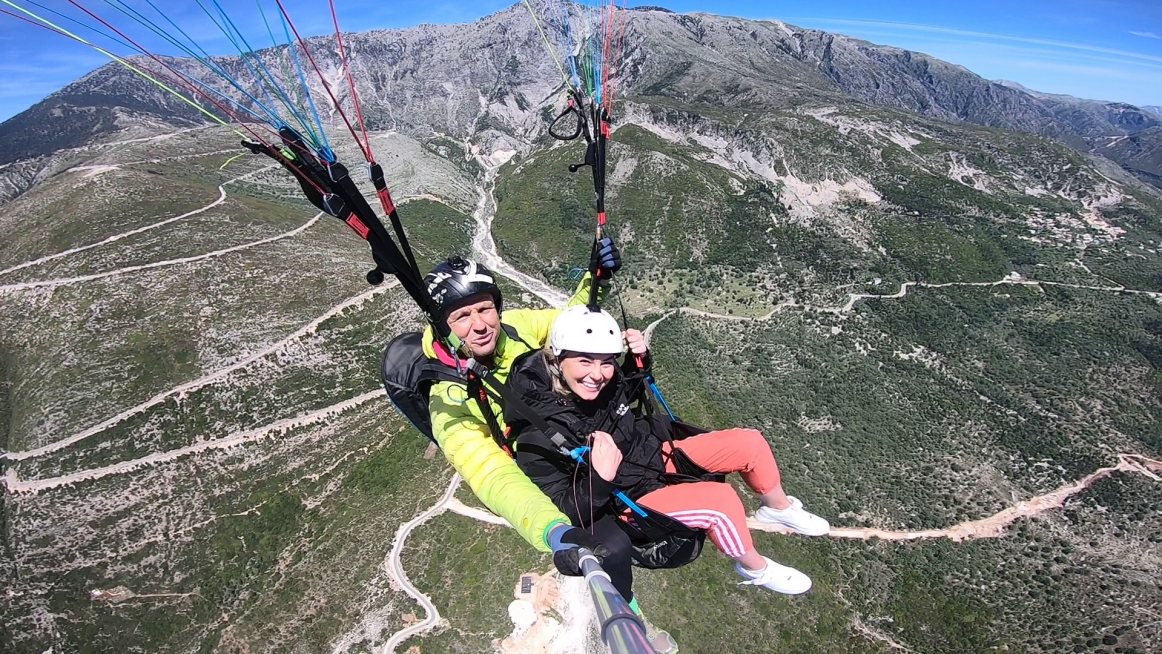
Paragliding is a free-flight sport in which a pilot and passenger share a fabric wing inflated by forward motion through the air. At Llogara Pass, tandem flights pair first-time flyers with certified instructors who manage navigation, altitude, and landing while passengers experience coastal thermals rising from the Ionian Sea.
Quick answer
Paragliding uses a non-rigid wing made of ripstop nylon cells that fill with air during launch, creating an airfoil shape that generates lift. In tandem flights, the pilot controls brake toggles, weight shifts, and the reserve parachute system while the passenger is secured in a separate harness connected by carabiners rated to 2,500 kilograms. Flights depend on wind speed between eight and twenty-five kilometers per hour and thermal activity strongest in morning conditions.
The paraglider wing comprises between twenty-two and thirty-two individual cells sewn together, each opening at the leading edge to capture airflow. As the pilot runs forward during launch, ram-air pressure inflates the cells into a semi-rigid airfoil, and the wing begins producing lift once forward speed reaches fifteen to eighteen kilometers per hour. The entire assembly weighs between four and seven kilograms, light enough to carry in a backpack yet engineered to support combined loads exceeding two hundred kilograms in flight. Tandem paragliding separates pilot and passenger into independent harness systems connected by reinforced webbing and steel carabiners. The passenger sits in a reclined position with a five-point harness distributing load across the chest, waist, and thighs, while the pilot occupies a higher position to manage the wing's brake lines and risers. Both harnesses attach to a reserve parachute container, a secondary system that deploys within three seconds if the main wing collapses. Modern reserve chutes use spring-loaded pilot chutes and are repacked every six months by certified riggers. Weather dictates every aspect of flight safety. Paragliders require consistent wind between eight and twenty-five kilometers per hour, measured at launch altitude rather than ground level. Wind direction must align within forty-five degrees of the launch slope, and thermal activity—rising columns of warm air—provides the lift that extends flight duration beyond a simple glide. At Llogara Pass, morning thermals begin forming between nine and eleven o'clock as the sun heats the rocky slopes above the coastal plain, creating updrafts that can extend a fifteen-minute glide into a thirty-minute soaring session. Pilots assess cloud base height, wind shear, and surface gusts before committing to launch. First-time flyers require no prior training but must meet weight limits between forty-five and one hundred ten kilograms and possess sufficient mobility to run three to five steps during takeoff. The pilot provides a pre-flight briefing covering body position during launch, in-flight posture, and landing procedures, which involve lifting the legs as the ground approaches. Understanding paragliding explained means recognizing that the sport combines aerodynamic principles with real-time weather interpretation—each flight is a negotiation between the wing's design, the pilot's skill, and the atmospheric conditions present that morning.
“The entire assembly weighs between four and seven kilograms, light enough to carry in a backpack yet engineered to support combined loads exceeding two hundred kilograms in flight.”
The best arrival window for paragliding at Llogara Pass is 09:00–12:00. Arriving during this period is essential because optimal wind and weather conditions for flying usually occur in the morning.
Mild 15–22°C; stable thermal activity
Ideal for consistent morning wind conditions without the intense summer heat.
Warm 25–30°C; early morning sea breezes
Flights are strictly limited to the early morning hours before thermal turbulence increases.
Cool 18–24°C; calm wind profiles
A favorable period with stable air masses and fewer visitors at the launch site.
—
These times offer the highest probability of calm conditions and focused attention from staff.
Verdict: The optimal period for flying is April, May, September, or October, specifically within the 09:00–12:00 arrival window.
A tandem paragliding flight at Llogara Pass follows a controlled procedure managed entirely by your certified pilot. From gear-up to landing, the experience lasts 15–20 minutes, with most of that time spent airborne over the coastline.
Your instructor will brief you on body position during takeoff and landing—keep your legs ready to run, and listen for the command to sit back once airborne.
The pilot double-checks every buckle and connection point. Many first-timers forget to tighten the leg straps; your pilot will verify before you move to the edge.
The wing inflates behind you as you accelerate down the slope. The most common error is stopping mid-run—commit to the pace your pilot sets, even as the ground drops away.
Your weight transfers fully into the seat as the wing lifts. First-timers often tense their legs; relax and let the harness do the work while your pilot steers and adjusts altitude.
The pilot controls direction and descent rate, using thermals to extend the flight when conditions allow. You're a passenger—no input required unless your pilot offers to let you try the steering toggles.
Your pilot will instruct you to lift your legs and prepare to stand. The landing is gentle but requires you to stay alert and follow the final verbal cues as the ground rises to meet you.
Proper preparation ensures a comfortable and safe tandem flight over the Albanian Riviera.
First-time tandem passengers often misunderstand their role during flight. These behavioral errors can compromise safety during take-off and landing.
Sitting back or hesitating during take-off run
Run forward confidently with the pilot until you're both airborne. Hesitation can prevent clean lift-off and force an abort.
Leaning forward or grabbing the lines mid-flight
Keep your hands on the harness straps and maintain an upright seated position. Interfering with the lines disrupts the pilot's control.
Lifting legs too early on landing approach
Keep your legs down and ready to run until the pilot signals. Early leg-lift turns a smooth landing into a dragged arrival.
Booking without checking wind forecasts for your dates
Morning flights (09:00–12:00) offer the most reliable conditions, but weather can ground all operations. Confirm on the day by calling +355696661666.
Arriving after midday expecting calm conditions
Wind accelerates in the afternoon along Llogara Pass, often closing the launch window. Plan to arrive during the 09:00–12:00 optimal period.
Llogara Pass paragliding services operate on a consistent schedule throughout the week. The site remains accessible daily to facilitate tandem flights.
Entry to Llogara National Park is free for all visitors. Fees apply exclusively to tandem paragliding services provided by operators.
Verdict: Park access costs 0 EUR, while tandem paragliding fees are determined by individual service providers based on flight arrangements.
Llogara Pass is located within Llogara National Park along the SH8 highway in Albania. The most accessible way to reach the launch site is by private vehicle or taxi, navigating the mountain pass that connects the coastal region with the interior.
SH8 highway to Llogara National Park
SH8 route to Llogara Pass
Regional bus lines to Llogara National Park
The location is situated directly off the SH8; please ensure you coordinate your meeting point at Llogara Pass in advance with your service provider via https://flytandem.al or +355696661666.
Everything you need to know about paragliding explained
Paragliding explained for beginners focuses on the fundamental concepts of flight, equipment, and safety procedures before your launch. It is designed to demystify the experience so you feel comfortable and prepared for your adventure.
When considering paragliding explained at Llogara Pass, remember that you are flying in a national park with specific wind patterns. Safety is managed by experienced pilots who monitor thermals and landing zones throughout the day.
Weight and age requirements vary based on the equipment and pilot discretion, so it is important to consult your service provider. Generally, physical health sufficient for a light jog during takeoff is required.
Yes, the process involves a thorough pre-flight briefing where the mechanics of tandem flight are covered as part of paragliding explained. You will learn how the harness works and how to coordinate with your pilot for a smooth takeoff and landing.
The best arrival window is 09:00–12:00, as optimal wind and weather conditions for flying usually occur in the morning. Arriving during this period helps ensure a safer and more pleasant flight.
There is 0 EUR entrance fee to the park, as entry is free. Fees apply only for tandem paragliding services, which are managed by external operators.